By GreyloopsUpdated 12 min read
The mobile app development company you hire shapes your app’s quality, security, cost and long-term success. This guide walks you through eight practical steps to compare app development companies, the questions to ask before you sign, and the red flags that tell you to walk away.
Choose a mobile app development company by checking how well it matches your requirements, not by price alone. In short:
Six things to look for before you choose a partner
Don’t choose a mobile app development company based on price alone. Evaluate technical expertise, business understanding, and the ability to deliver long-term value.
A strong development partner should understand your business objectives before defining the technology, architecture, and development approach.
A polished portfolio is only the starting point. Look for experience with complex applications, scalable architecture, integrations, security, and real-world business requirements.
The right architecture and technology decisions from the beginning can significantly reduce future development costs, performance issues, and scalability challenges.
Security, performance, and scalability should be built into the application from the start—not treated as improvements after launch.
Choose a technology partner that can support your application beyond development, including testing, deployment, maintenance, optimization, and continuous improvement.
Choosing the right mobile app development company directly influences your product’s quality, security, scalability, cost, and time to market. A capable technology partner brings the right expertise, architecture, and development approach to turn your business requirements into a reliable product built for long-term growth.
Before selecting a mobile app development company, clearly define what you want to achieve and what the application needs to deliver. A well-defined scope helps development teams understand your expectations, recommend the right technology approach, estimate costs accurately, and create a realistic delivery plan.
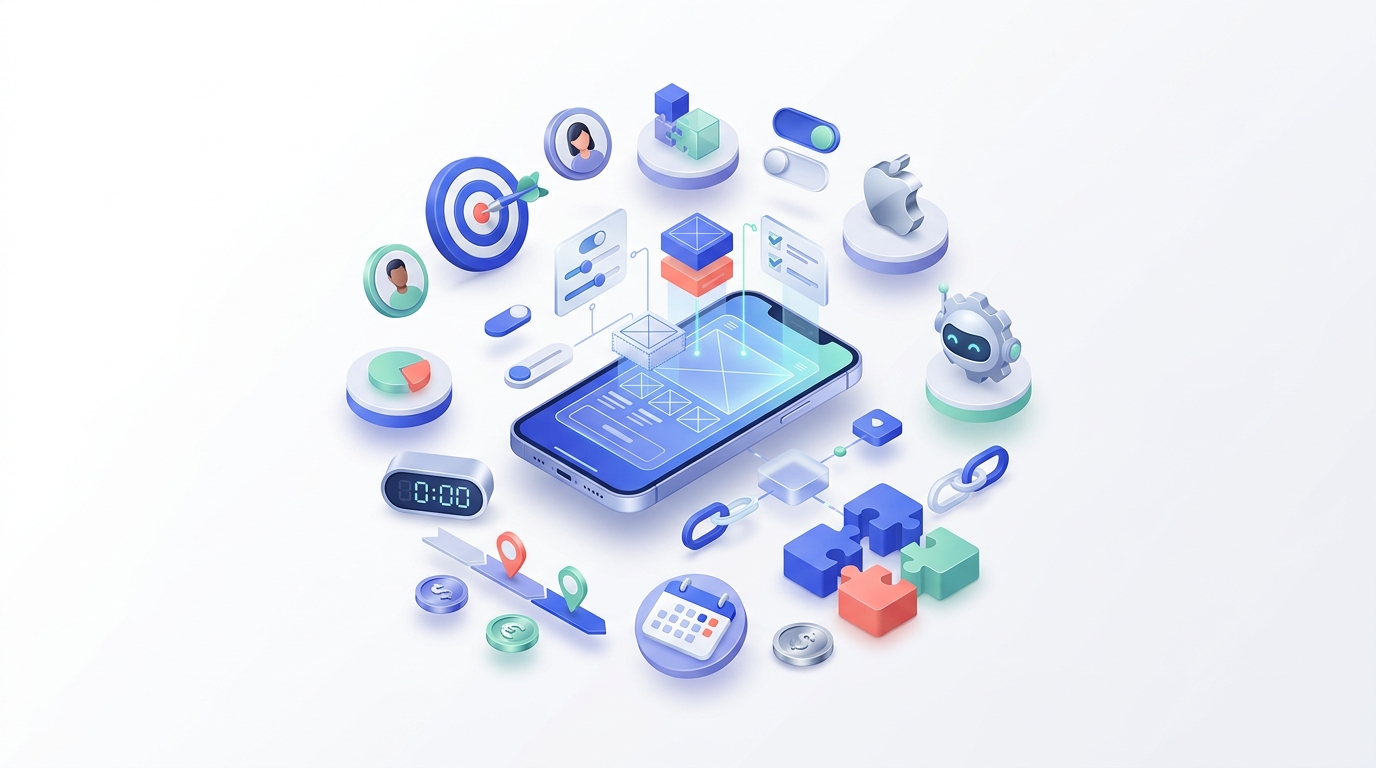
Define the business problem your app is intended to solve and the outcomes you expect to achieve. Clear objectives help ensure that technology decisions remain aligned with your broader business goals.
Identify who will use the application, their needs, behaviors, and expectations. Understanding your users helps shape the app’s functionality, user experience, accessibility, and overall product strategy.
Determine the essential features required for the initial version of the application. Prioritize capabilities based on business value and user needs rather than trying to include everything from the beginning.
Decide whether your application should support iOS, Android, or both. Your target audience, functionality, performance requirements, and budget can help determine the most suitable development approach.
Identify the external systems and services the application needs to connect with, such as payment gateways, APIs, CRM platforms, enterprise systems, authentication services, analytics, or cloud platforms.
Establish a realistic budget and expected delivery timeframe based on the application's complexity, features, platforms, integrations, security requirements, and long-term support needs.
Technical expertise is one of the most important factors when choosing a mobile app development company. Look beyond basic app development and assess whether the team has the engineering capabilities to design, integrate, secure, and scale a complete digital product.
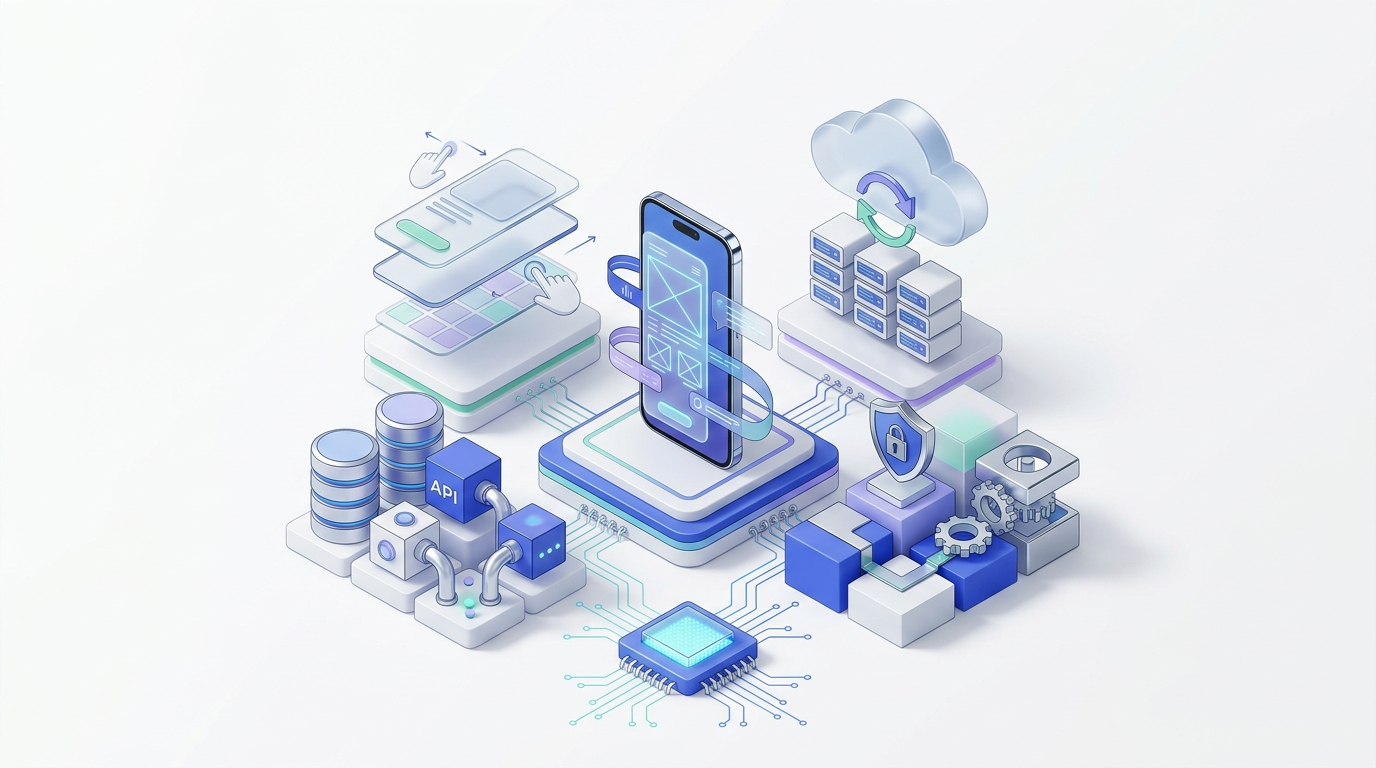
Evaluate experience across native and cross-platform development technologies, along with the ability to select the right approach based on your application’s requirements, performance expectations, and target platforms.
A strong development partner should combine technical engineering with user-centered design to create intuitive, accessible, responsive, and consistent mobile experiences.
Assess their ability to build secure and reliable backend services, APIs, databases, authentication systems, and integrations that provide a strong foundation for your mobile application.
Modern mobile applications often depend on cloud platforms for hosting, storage, scalability, security, monitoring, and data services. Ensure the team can integrate and optimize cloud environments effectively.
Strong architecture is essential for long-term application performance and maintainability. Look for experience designing modular, scalable, secure, and integration-ready systems that can evolve with your business.
Consider whether the company can integrate AI, machine learning, automation, intelligent analytics, and other emerging technologies where they provide meaningful business or user value.
A company’s portfolio gives you a clear view of its practical experience, technical capabilities, and approach to solving real business challenges. Do not judge a development company only by the number of apps it has built. Look at the type of projects, their complexity, the technologies used, and the results delivered.
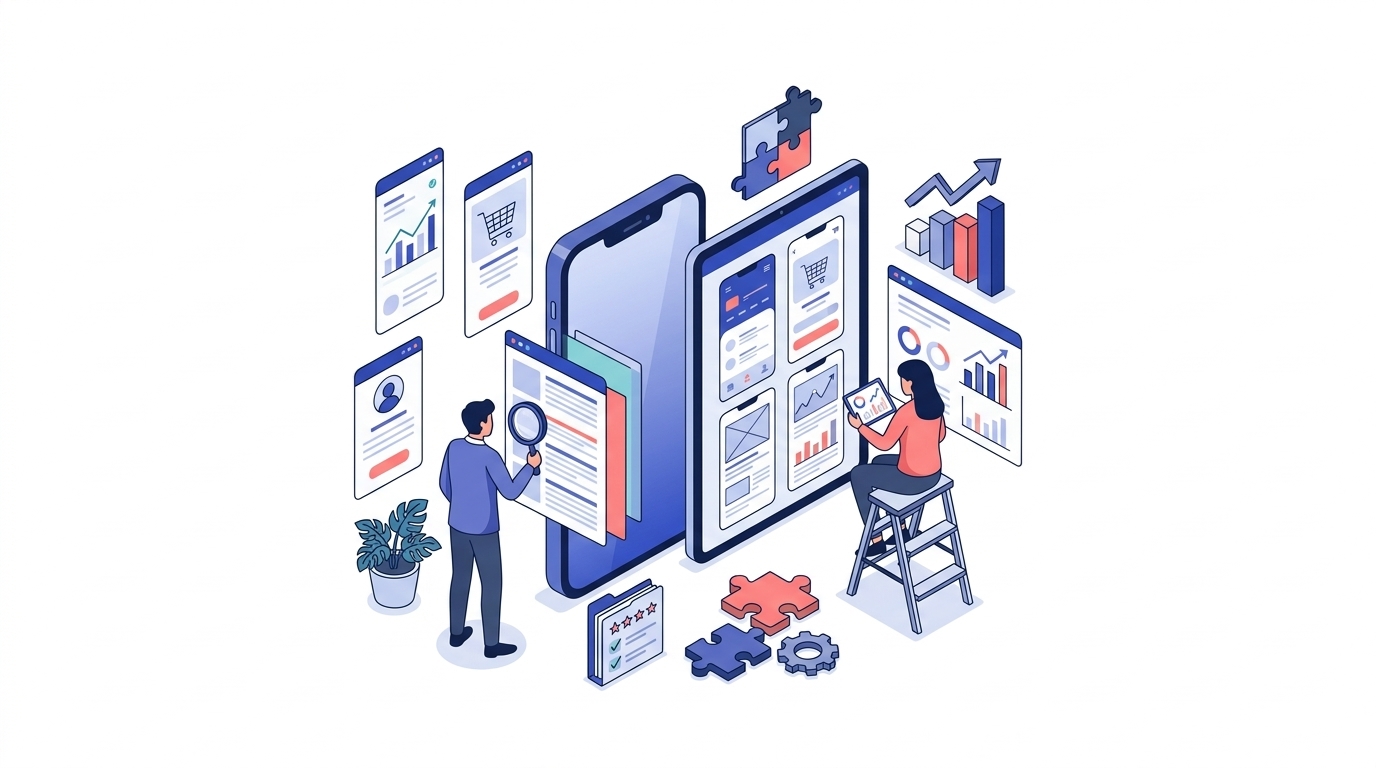
Review projects that are similar to your industry, business model, target users, or application requirements. Relevant experience can help the development team understand your challenges faster and reduce common project risks.
Look beyond simple applications and check whether the company has experience with complex features such as real-time communication, payment systems, third-party integrations, location services, enterprise systems, AI capabilities, or high-volume data.
Understand which technologies and development approaches were used. A strong portfolio should demonstrate the ability to build secure, scalable, maintainable, and high-performing applications.
A good case study should explain more than what was developed. Look for measurable outcomes such as improved user engagement, faster operations, increased efficiency, better customer experience, or business growth.
Mobile apps often require continuous updates, improvements, security maintenance, and platform upgrades. Look for evidence that the company can support and evolve products beyond the initial launch.
Detailed case studies are more valuable than screenshots alone. They should show the original challenge, development approach, technology solution, key features, and final results.
Security, scalability, and performance are essential when choosing a mobile app development company. Your application should protect sensitive data, deliver a reliable user experience, and handle growing business demands without major technical issues.
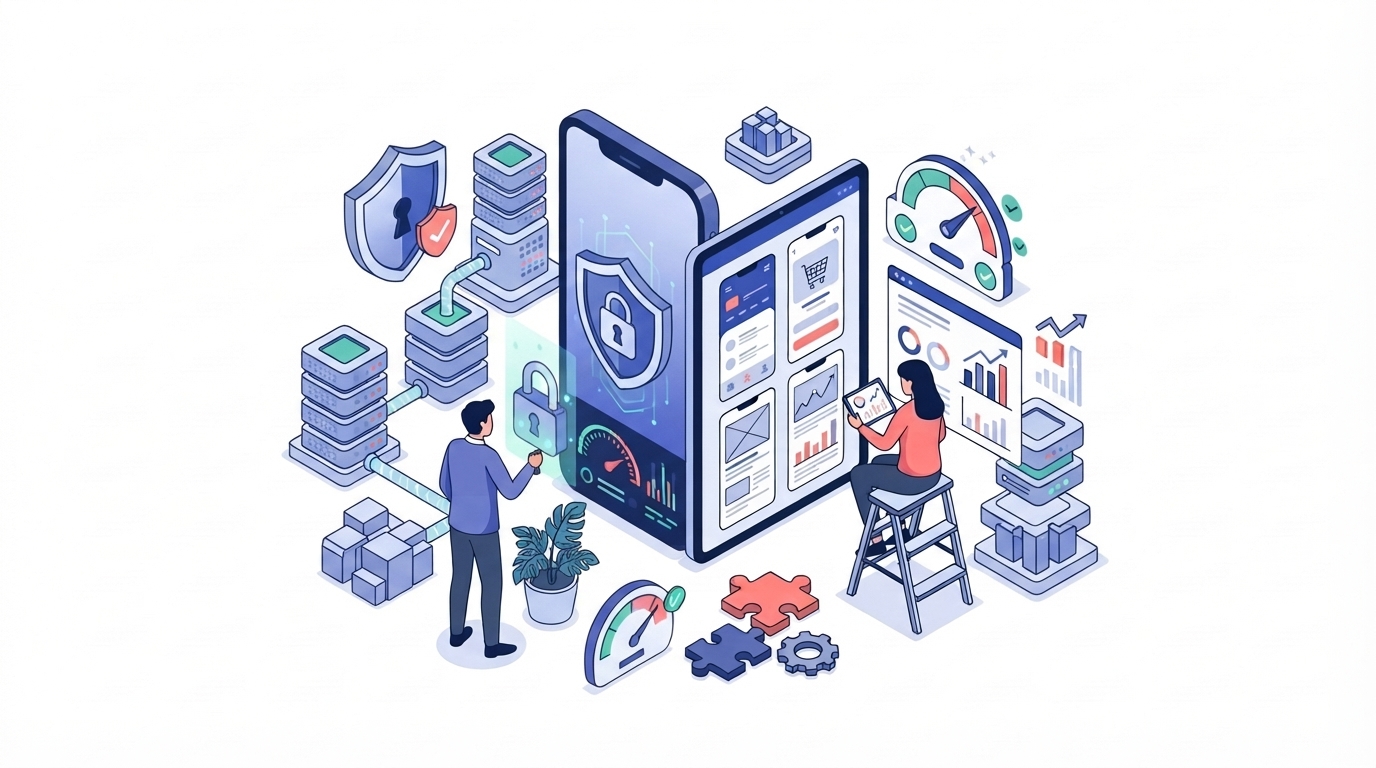
Ensure the company follows strong security practices to protect user information, business data, and application access. Look for secure authentication, data encryption, access controls, and privacy measures throughout development.
Choose a team that can build applications to support growing users, increasing data volumes, and new features. A scalable architecture helps your application adapt to changing business needs without requiring major changes to the entire system.
A well-developed mobile app should load quickly, respond smoothly, and work reliably across supported devices and network conditions. Ask how the company tests speed, stability, resource usage, and overall application performance.
Check whether the company follows structured testing before release. Functional, security, compatibility, and load testing help identify issues early and improve application reliability.
For enterprise applications, ongoing monitoring is important to identify errors, track performance, and reduce downtime. Ensure the development partner can support updates, issue resolution, and continuous optimization after launch.
A well-defined development process helps keep your mobile app project organized, transparent, and aligned with your business goals. Before choosing a development company, understand how it manages each stage, from planning and design to deployment and ongoing support.
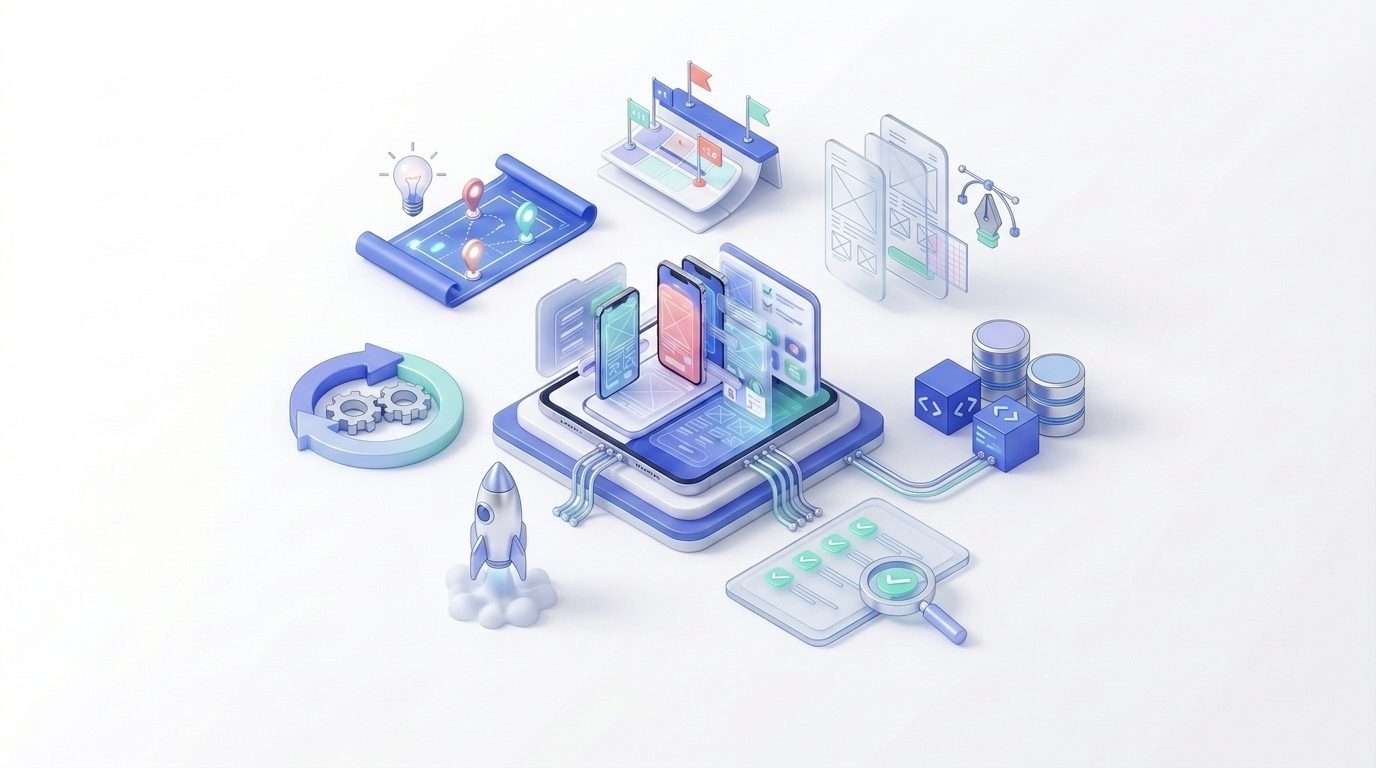
The team identifies your business objectives, target users, project scope, core features, and technical requirements to establish a clear foundation.
The company defines the technology approach, project roadmap, timeline, budget, and development priorities before moving into execution.
Designers create user flows, wireframes, and interactive prototypes to establish an intuitive experience before development begins.
Developers build the mobile application, implement its features, and connect backend services, APIs, databases, and third-party systems.
The application is tested for functionality, security, performance, and device compatibility to identify issues before release.
The team prepares the application for release, manages app store submission requirements, and ensures the production environment is ready.
After launch, the development partner provides updates, fixes issues, monitors performance, and improves the application as business and user needs evolve.
Clear communication and effective collaboration are essential for a successful mobile app development project. Choose a company that keeps you informed, shares progress regularly, and involves your team in important decisions throughout development.
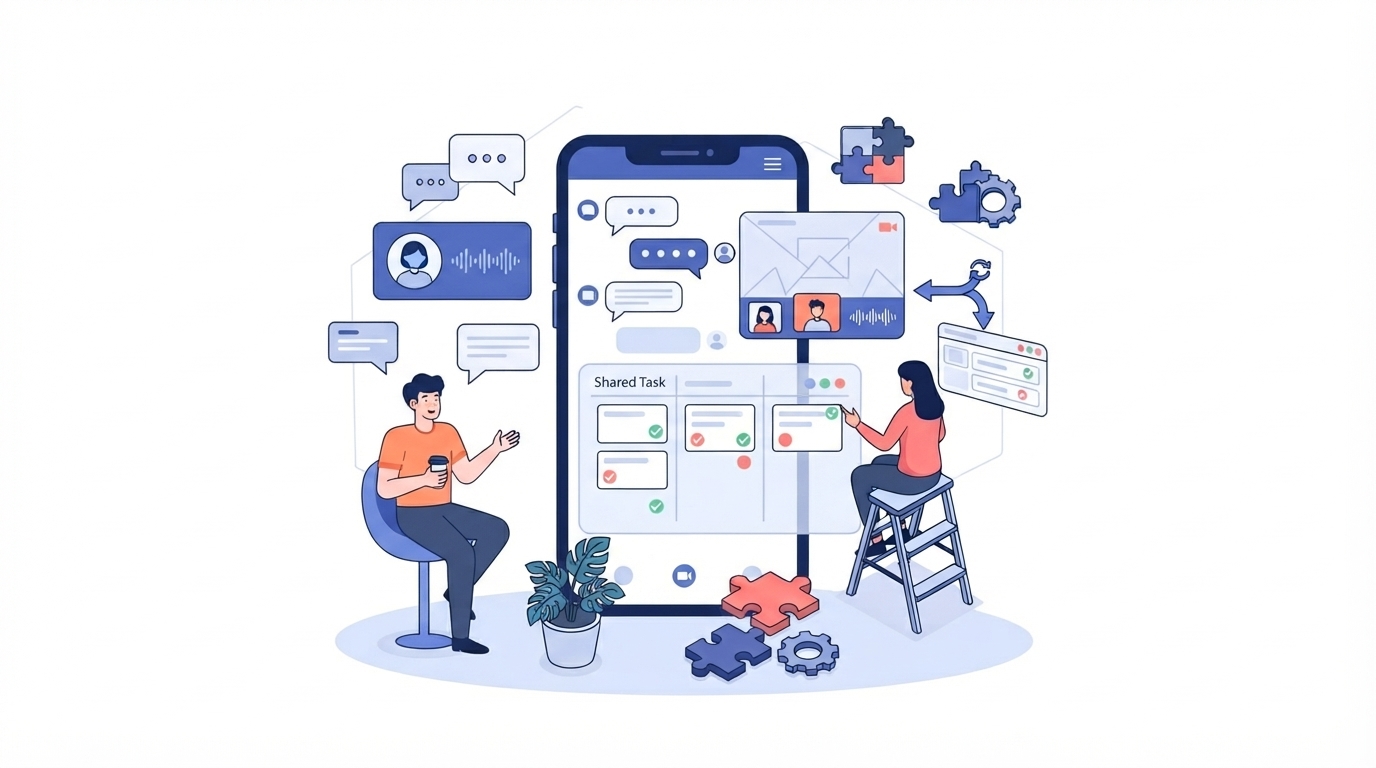
Ensure the company provides regular progress updates, clear milestones, and visibility into completed work, current tasks, and potential challenges. Transparency helps you understand how the project is progressing and where attention is needed.
Understand how the team communicates, shares updates, and handles questions. Regular meetings, email, project management platforms, and direct communication channels help keep everyone aligned.
Proper documentation helps maintain clarity throughout the project. Requirements, technical decisions, project updates, and agreed changes should be recorded to reduce misunderstandings and support future development.
Your business, product, and technical teams should have opportunities to review progress and provide feedback. Regular involvement helps ensure the application meets business requirements and user expectations.
Choose a development partner that responds to concerns, communicates risks early, and takes responsibility for agreed deliverables. Strong collaboration helps resolve issues before they affect the project timeline or quality.
The cost of mobile app development depends on the application's complexity, features, technology, integrations, security requirements, and ongoing support needs. Instead of choosing the lowest quote, evaluate the overall value, quality, and long-term cost of ownership.

Review the proposed scope, features, design, development, testing, deployment, and support. A lower quote may exclude important services that you will need to pay for separately.
Compare proposals based on the same requirements. Check what each company will deliver, which technologies it will use, and whether the proposed timeline and resources are realistic.
Look beyond the initial development cost. Hosting, third-party services, licensing, maintenance, security updates, and future improvements can all contribute to the total cost of running an application.
Ask about additional charges for scope changes, new integrations, app store requirements, infrastructure, and post-launch support. Clear pricing and agreed change-management processes help prevent unexpected expenses.
Poor architecture, inadequate testing, and rushed development can lead to expensive fixes later. Investing in quality engineering from the beginning can reduce technical risks and make future improvements easier.
Choose a development approach that fits your budget while meeting essential requirements for security, performance, and scalability. A phased release can help you launch core features first and expand based on user feedback and business priorities.
Launching a mobile application is only the beginning of its lifecycle. After release, the application needs ongoing maintenance, performance monitoring, security updates, and improvements to remain reliable and meet changing user expectations.
Regular maintenance helps keep the application compatible with supported devices, operating systems, libraries, and third-party services. It also helps prevent technical issues from affecting users.
Monitoring helps identify slow response times, crashes, errors, and other issues that may affect the user experience. Tracking application performance allows teams to investigate problems and improve reliability.
Security threats and software vulnerabilities can change over time. Regular updates, dependency management, access reviews, and security patches help protect application data and reduce potential risks.
Even well-tested applications may encounter issues after launch. A support team should investigate reported problems, resolve defects, and improve stability based on real-world usage.
User needs and business priorities evolve. Continuous improvement allows you to introduce new features, improve existing workflows, integrate additional services, and respond to user feedback.
As the application grows, its infrastructure, database, APIs, and architecture may require optimization. A capable partner helps maintain performance as usage, data volumes, and business demands increase.
Before signing an agreement, clarify support hours, response times, maintenance responsibilities, service-level agreements (SLAs), and escalation procedures. Clear expectations help ensure that support is available when your business needs it.
Use these questions in your first calls with each shortlisted company. Clear, specific answers are a good sign; vague ones are worth probing.
Ask for examples with similar complexity, industry or integrations, and whether you can speak to one of those clients.
A good partner explains when native iOS and Android development makes sense and when a cross-platform framework is the better fit for your budget and features.
Find out the roles, seniority and location of the team, and whether the same people will stay with the project through launch.
Look for a structured discovery phase and a clear, written process for pricing and approving changes.
Ask which devices and OS versions they test on, and how they cover functional, performance and security testing.
Expect concrete answers on authentication, encryption, access control and how vulnerabilities are handled.
Regular demos and test builds let you catch problems early instead of at the end of the project.
You should own all of them. Confirm this in the contract and make sure accounts are registered to your business.
Clarify maintenance tasks, OS updates, bug-fix response times, support hours and how support is priced.
Check design, testing, deployment, third-party services, hosting and support so proposals can be compared fairly.
Any one of these is a reason to ask harder questions. Several together usually mean you should keep looking.
The best mobile app development company for your business is not necessarily the largest or the cheapest. It is the partner that understands your goals, has delivered apps of similar complexity, builds security and quality in from the start, communicates openly and supports your product long after launch.
Start with clear requirements, shortlist a few companies, ask the questions above and compare proposals on the same scope. Taking the time to choose carefully reduces risk, avoids costly rework and gives your app a far better chance of succeeding.
Cost depends on the app’s complexity, number of platforms, design requirements, integrations, security needs, team location and post-launch support. The most reliable way to compare costs is to give several companies the same written requirements and ask for itemized quotes. Launching a focused first version and adding features later can also keep the initial budget under control.
Timelines depend on scope. A focused first version with a small feature set usually takes a few months, while complex apps with many integrations take longer. Ask each company for a phased plan that covers discovery, design, development, testing and app store release, with clear milestones.
Native development (Swift for iOS, Kotlin for Android) suits apps that need maximum performance or deep access to device features. Cross-platform frameworks such as Flutter or React Native let one codebase run on both iOS and Android, which can reduce cost and time to market. A good development company recommends an approach based on your requirements rather than its own preference.
A freelancer can work well for small, well-defined apps. A development company is usually the safer choice for business-critical apps, because it provides a full team (design, development, QA, DevOps and project management), continuity if someone leaves, and structured support after launch.
You should. Make sure your contract transfers ownership of the source code, designs and other deliverables to your business, that you have access to the code repository, and that app store and cloud accounts are registered in your company’s name.
It should define the scope and deliverables, milestones and payment schedule, the process for change requests, intellectual property ownership, confidentiality, testing and acceptance criteria, warranty and bug-fix terms, and the post-launch support arrangement.